

How To Repair Power Supply Amplifier
Prime Sound is reader-supported. We may earn a commission through products purchased using links on this page. Learn more almost our process here
When home stereo or amplifier stops operation properly, you lot want it dorsum in good shape in no time, but first things first. You must sympathise the components of the amplifier and how information technology works before you can figure out what could go wrong with information technology and how to ready its problems. The complexity of an amplifier repair usually depends on its parts that accept a malfunction and their location in the unit of measurement.
Earlier you learn how to repair amplifiers, you must brace yourself to delve into the wealth of information almost its operations. Many things tin go incorrect with your amplifier, but there are mutual problems that are likely to bear upon near all brands and models. Read on for more details on how to identify an amplifier trouble, and what and how you need to set up it. You'll also get to know how to disassemble, audit, and clean an amplifier.
What is an amplifier?
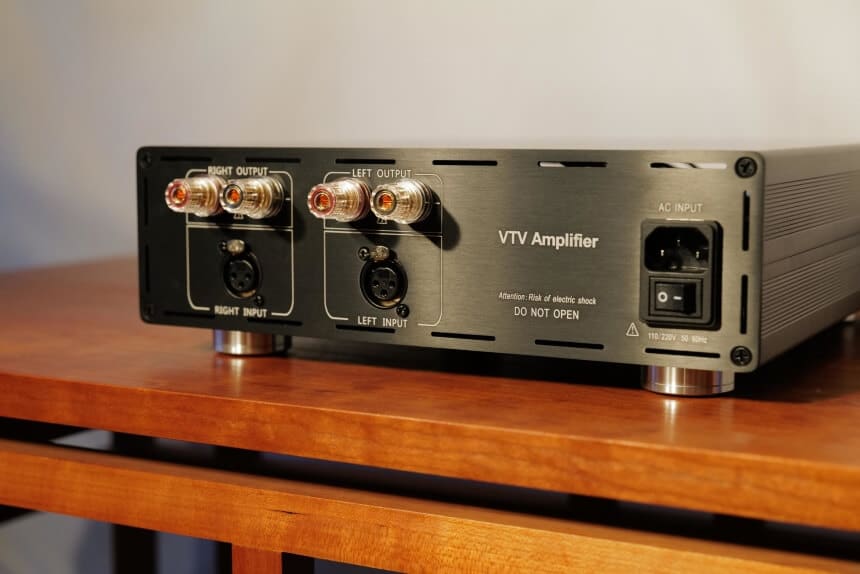 An amplifier is an electronic device that magnifies and controls output audio signal sources from sound abode entertainment devices similar external CD player and tape histrion, or a congenital-in AM-FM receiver. The output betoken is usually fed to sound speakers.
The main components of an amplifier include: speaker, ability amp and preamp. The preamp is the part that converts the audio signal into an electrical current. Your amp and so receives the electrical currents from the preamp, adds voltage, then ship the signal to the speakers.
Amplifier problems
And so much could get wrong with an amplifier. The nearly common problem is operator error. An instance of an operator fault is when your speakers light upwards and there isn't any sound existence produced. In this example, the speaker wires may be disconnected or the speaker button may not be selected. It is too highly likely that the cord may be damaged or he internal fuse blown.
Receiver problems are besides mutual and their near probable cause is usually oxidation of electrical contacts and jacks. If the jack or plug has gunk on it, it will fail to behave electricity. This means the device next in line doesn't get the bespeak.
Most times you will detect that the problem is not in the amplifier, but in one of the connections between it and its speakers or an audio signal source. Before disassembling the unit to expect further, apply a multimeter or a continuity tester to check the continuity of audio cords.
Identifying a trouble in an amplifier is not every bit hard as finding the source of the trouble. Identifying the problem is equally simple as realizing your amplifier is powering on, or it is not producing any sound. Finding the crusade of the bad sound or lack of sound is the real deal. Sometimes you may fifty-fifty think your amplifier has an issue when it's the audio unit that feed into it like a speaker or DVD player that actually has a problem.
How to fix an amplifier
Fixing an amplifier is pretty similar to fixing many other appliances because they are assembled with similar components. Some of the basic components include cords, which may neglect to deliver electricity, fuses, which may need replacement, and switches and controllers that may crusade bug.
What you'll need
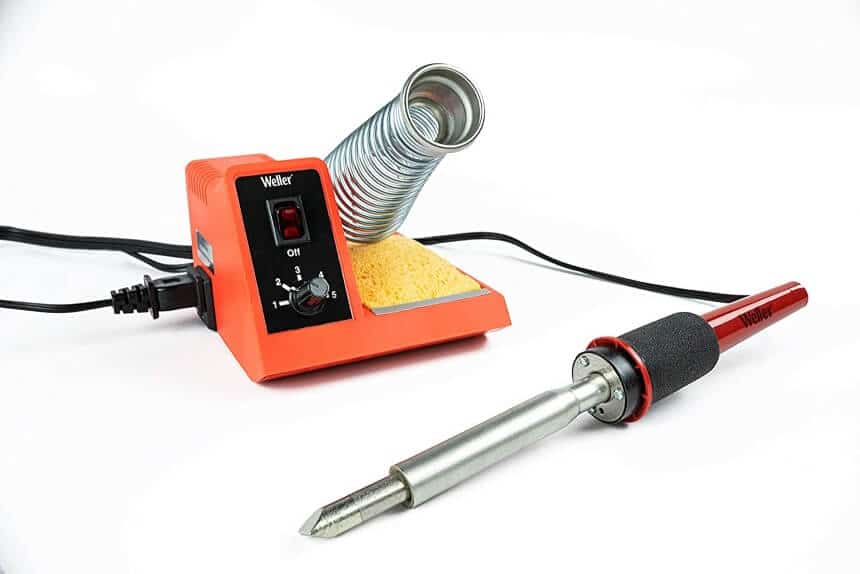 Some of the essential tools you lot need to gather for fixing an amplifier include:
- Soldering atomic number 26 and solder. According to most expert reviews, the Anbes Soldering Iron Kit must be the about reliable soldering kit in terms of versatility and immovability. The kit has a broad range of uses and is highly portable.
- Screwdrivers
- Electrical contact cleaner spray, or a tin of compressed air. The CRC 05103 QD Electronic Cleaner is one of the most popular electronic contact cleaners out there. It gets all the rave from users because it is quick-drying, plastic safe and leaves no residue. It too helps in the prevention of contact failure.
Repairing an amp: step-past-pace
Here is a simple pace past pace guide on how to repair an amplifier:
Pace 1
Plow down the volume to zero then switch off the amplifier and then let it absurd downwards.
Footstep 2
Turn the amplifier on. If the LED that indicates 'ON' lights up, and so information technology ways at that place's no issue with the power supply. Try to operate information technology ordinarily by turning up the volume. If y'all get some sound only information technology is too low or of poor quality, and then it means the amplifier is working but not to its optimum level. This could be caused by a loose connection. If no sound is produced, and so it is highly likely that a part of information technology is broken.
Step 3
Utilize a screwdriver to screw the dorsum panel of the amplifier. Remove the chassis to expose the circuit lath. Check for obvious signs of impairment like a diddled fuse or transistor. You volition know a fuse or transistor is blown when you run across a brownish discoloration. If that's the case replace either of the parts with an identical part.
Pace 4
Expect to see if there are any loosely connected wire joints. You tin can practise this by tracing the circuit wiring from input and gently pulling on the wire. If the wiring is slack, and so it means there is a loose connection. You lot tin re-establish the connection by melting the loose wire joints and soldering them.
Footstep 5
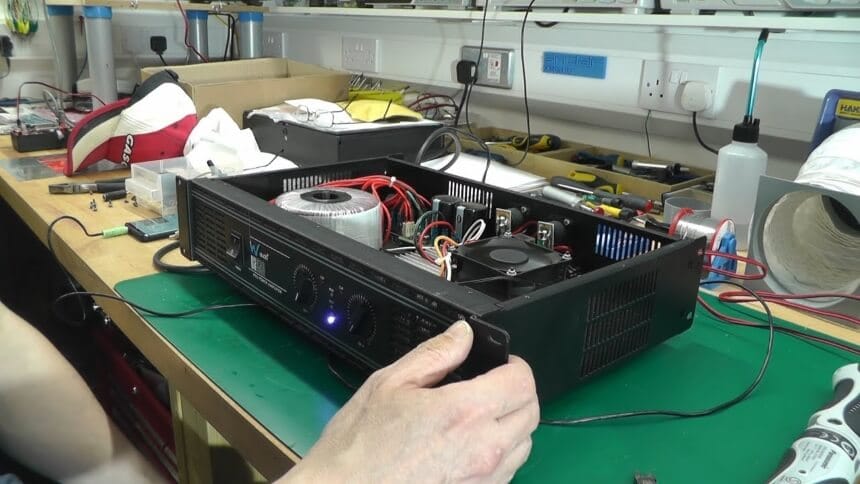 Check out the printed excursion lath and be on the look for loose-plumbing fixtures capacitors and resistors. The excursion is usually shorted when ane of the parts comes away from the circuit. Also, when a resistor stops regulating electric current the whole circuit fails.
Step 6
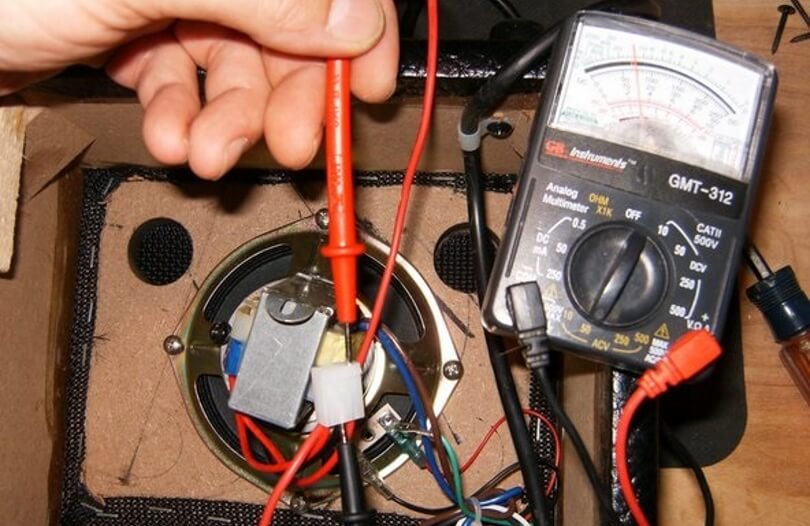 Grab a voltmeter probe and identify it directly after the commencement resistor in the signal chain to test if information technology's performance properly. Set the meter to 'resistance' then switch on the amplifier. The voltmeter should requite y'all a reading within v pct of the value. If you become anything exterior this variance, then the resistor is malfunction. If it reads goose egg, then the resistor is completely shorted.
Step 7
If you lot find that the resistor is shorted, turn off the amplifier and replace information technology. Remove the resistor by disconnecting the solder joint on the base of the circuit board the solder in an identical replacement…
Step 8
The concluding pace is to test the output transformer. Use a screwdriver to unscrew the transformer's housing so that you lot tin expose the principal winding. Adhere meter leads to the winding within the transformer then plough the amplifier on. You should get a reading that is almost similar to the power handling detailed in your user transmission. If the meter reads zilch, and then it means the transformer whorl is shorted. An overly high reading means the transformer is leaking. In both cases, y'all need to supplant the transformer.
Final thoughts
There is no guarantee that your guitar amp or bass practice amp volition never have any issues. Therefore, information technology is important to have a inkling on amplifier troubleshooting and repair tips. We have provided all the hints and tips you may need to fix your amplifier whenever it stops functioning properly.
Before you learn how to repair an amplifier, whether it's a stage or fender amplifier, you must understand its build and operation. Disassembling the unit is pretty simple provided you have the right tools. If you are actually non up to fixing your amp yourself, you can always seek assistance from your manufacturer's customer care or a professional. As well, if you try all the repair options and the amp doesn't piece of work, you can get help from a professional.

Source: https://primesound.org/how-to-repair-amplifiers/
Posted by: wyantforray.blogspot.com
0 Response to "How To Repair Power Supply Amplifier"
Post a Comment